In 1970, Edwin Starr had a #1 song called “War.” Many of us are most familiar with the famous refrain of “War, What is it good for – Absolutely nothing.” This phrase sums up my feelings on WAR in baseball as it becomes an increasingly popular term and measurement of a player’s value.
Since the release of the film Moneyball (and the book to an extent), baseball fans and analysts have started to look more at the statistics and sabermetrics than the actual humans playing the game. What exactly are sabermetrics? Per the website for SABR, the Society for Baseball Research, sabermetrics is “the search for objective knowledge about baseball”. This research often uses statistical analysis to question traditional measures of baseball evaluation such as batting average and pitcher wins. Anyone who has read the book or seen Moneyball knows that the focus of the Oakland A’s in the early 2000’s was the team’s analytical, evidence-based, sabermetric approach to assembling a competitive baseball team, despite Oakland’s disadvantaged revenue situation. Due to the success of Billy Beane and the Athletics, sabermetrics are now an everyday part of baseball.
In baseball, like most sports, you can usually find a stat to support whatever you’re looking to prove. Heck, we live in an age where “stats for stats sake” have become the norm. Still, any statistic is only as good as the person behind it. Since WAR (wins above replacement) is the most common sabermetric discussed in terms of baseball, it might be helpful to have a better understanding of the term. So, what exactly is WAR? It attempts to evaluate a player’s total contribution (batting, fielding, base running, pitching) to his team. It is expressed in terms of wins over the perceived value of a replacement-level player at each position…basically comparing them to a minor league player.
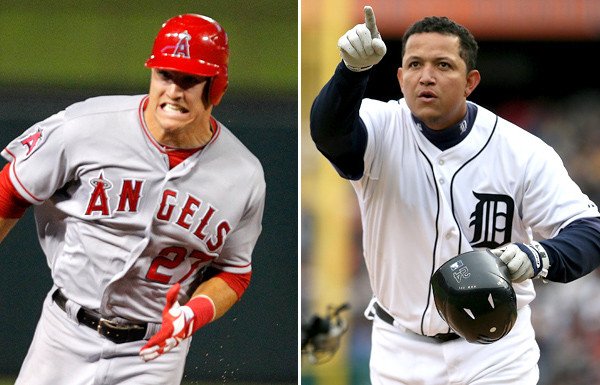 When the MVP race in the American League last season game down to two players, it became a hot topic of discussion between two schools of thought. Old school baseball fans and followers were wowed as Miguel Cabrera won the first Triple Crown in 45 years. The “new school” and those in the sabermetrics camp, pointed to the WAR of rookie phenom Mike Trout in the arguments to name him MVP. After much debate by analysts, Cabrera won the award handily – but the conversations about the proper way to determine the value of players have only intensified. While stats are a good tool to evaluate players in addition to the eyeball test, WAR is not the end all be all of measurement and shouldn’t be the only one we look at.
At the time of this year’s All-Star break, the WAR of pitchers was discussed when talking about who should both start and make the roster. ESPN even did a feature that selected the entire All-Star roster simply based on their WAR ranking. When you look at the WAR of all pitchers, the starters that were selected for the AL and NL are both in the top ten – but not where you would expect them to be. In the NL, Matt Harvey is 6th but 1st is Clayton Kershaw, who many thought should have been named the starter. On the AL side, Max Scherzer became the 1st pitcher to start a season 12-0 since Roger Clemens in 1986 (was 13-1 at the break) but is only the 10th best pitcher in baseball at the moment exclusively based on WAR. What’s even more interesting is that Clay Buchholz is 8th in the rankings even though he has been on the DL since mid-June. It boggles my mind that someone who can’t currently play has more “wins above replacement” than someone who was nearly perfect in the 1st half of the season. Yes, he was pitching really well when he got hurt, but also shows the holes in the logic of relying on such a measurement.
On the flip side, when you look at batting, Miguel Cabrera is threatening to win back-to-back Triple Crowns – but Chris Davis currently stands in his way as he leads all of baseball in homeruns. So who has the highest WAR? Outfielder Carlos Gomez, who plays for the Brewers. Miggy is 2nd but you wont find Davis on the list until 11th. While none of the players in the top 10 are on the DL, it’s also rather confusing that neither of the guys with over 90 RBIs so far this season is the hardest to replace based on the sabermetric.
Are stats in baseball important? Of course! Baseball, more so than any other major professional sport, is built on statistics. That being said, I also think it’s time to stop paying so much attention to what you see on paper and take the time to open your eyes to actually watch the game. Some of the guys playing right now could go down as the greatest of all time, not only of our generation, and it’s a shame that many people are so busy looking at and arguing about the sabermetrics that they’re missing out on being witness to the best that baseball has to offer.
While it’s not the easiest to understand how it’s computed and doesn’t always make sense when you look at other stats, WAR might be good for a little more than ‘absolutely nothing,’ – but also shouldn’t be relied on as the tell-all stat that it has become. While Moneyball showed us a new way to look at stats and baseball, it’s not the only way. We should be building on the past and what it taught us instead of trying to leave it behind for a completely new school of thought. Baseball is American’s Pastime and as always change comes slow. Just as we still have the “human element” in deciding games, we can’t lose that same perfect imperfectness when it comes to watching and analyzing the game as fans.


 Ms Mittens Mound